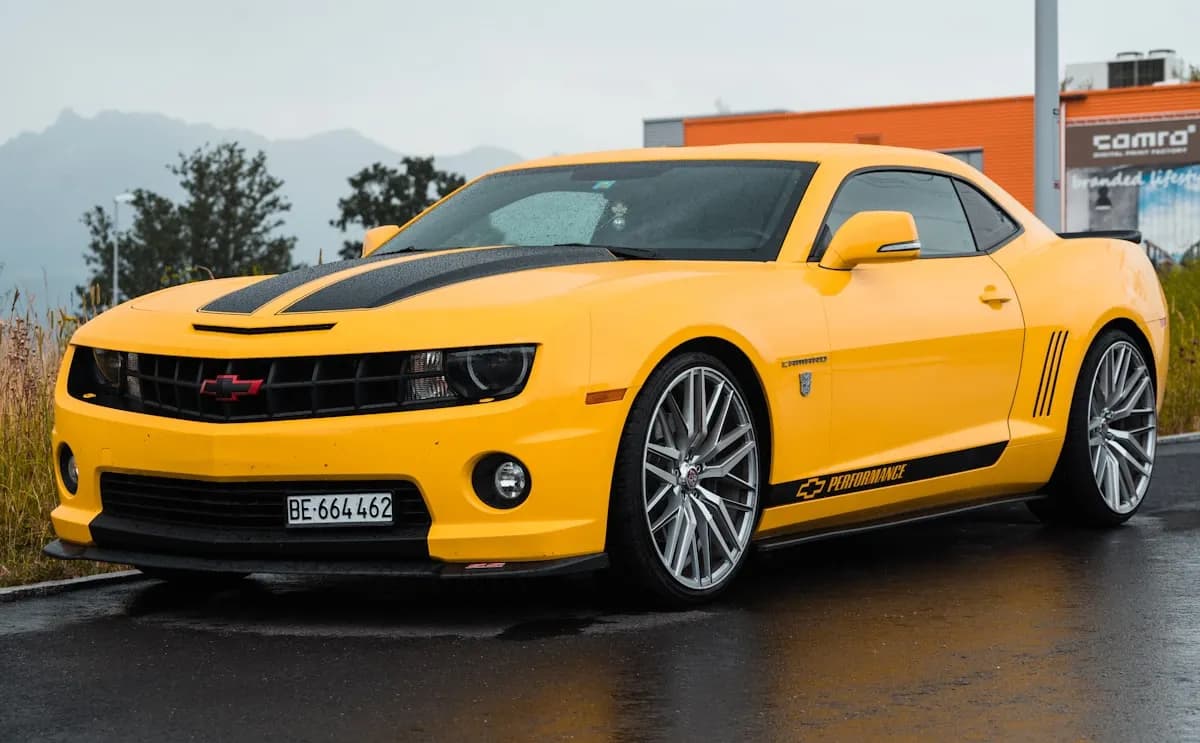
A buyer calls you, the appointment is set, and he wants to drive for ten minutes before deciding. That is the only moment in the sale when a stranger takes the wheel of your car before paying for it. It is also the moment when two very different risks get mixed up in everyone's mind: damage caused to a third party, and damage suffered by the car being tested. They do not fall under the same cover. The second one is the one that lands on you. Here is who is who, what each cover pays, what to check before handing over the keys, and what to do if the car comes back marked.
Handing your keys to a stranger, for twenty minutes
A test drive is not a formality. You are handing over an asset worth tens of thousands of francs to someone you know almost nothing about, so that he can drive it on roads he does not know, in a car whose braking and dimensions are equally unfamiliar to him.
In the vast majority of cases, everything goes fine. But the question to ask is not how likely it is, it is: if it happens, who pays for what. And that answer gets prepared before the first viewing, not while filling in an accident report.
Registered keeper, driver, owner: three distinct roles
In Switzerland, insurance attaches to the vehicle, not to the driver. Throughout the test drive, the car stays registered in the name of its keeper, and it is the insurance contract tied to that vehicle that applies.
The direct consequence: the buyer who takes the wheel does not bring his own cover with him. He is an occasional driver of your car. He does not become insured simply because he is insured elsewhere.
A third role, often confused with the other two: the owner. Keeper and owner are not necessarily the same person. Under a leasing agreement, the finance company remains the owner while you are the keeper. That changes who has to be informed, and sometimes what you are allowed to do with the car. If you are drafting the paperwork yourself, the article on what a vehicle sales contract must contain sets out how to identify the parties and the vehicle correctly.
Third-party liability covers others, not your car
Third-party liability is the compulsory insurance that allows the vehicle on the road. It answers for damage caused to others: the other car, the pedestrian, the low wall, street furniture.
It never repairs the car being tested.
So a collision during a test drive reads on two separate lines. The third-party share, handled by the compulsory mechanism. And the share relating to your own vehicle, which falls under something else. A test drive suspends nothing, creates no special regime and triggers no special cover: your car is on the road under the policy currently in force, with its current conditions.
Partial casco, full casco: what each one pays
Partial casco covers a list of events defined in the policy: theft, glass breakage, hail, collision with an animal, depending on the product you bought. It does not cover collision damage caused by the driver.
Full casco adds precisely that: collision damage suffered by the vehicle itself.
In practical terms: without full casco, a crushed bumper from a test drive stays at your expense, unless you reach an agreement with the buyer. And even with full casco, you usually front a deductible, whose amount is set out in your policy. That deductible is what then gets discussed with the buyer. The principle is simple: whoever damages someone else's vehicle through their own fault answers for it, and the damage left at your expense, deductible included, is part of what they have to make good. What is not a given is proof of fault, not the principle: hence the value of what was recorded and photographed before the drive. Your insurer will tell you what your policy covers and whether it pursues the driver itself; claiming the deductible, on the other hand, is settled between you and the buyer.
Two things to check in your own policy, not on a forum: the clause on authorised drivers, and whether there is any restriction based on age or how long the licence has been held. Call your insurer before you publish the listing, and put the question exactly as it stands: is a third party who test drives my car with a view to buying it covered, and under what conditions. That answer depends on the contract, it cannot be guessed.
The premium level: the cost that arrives next year
A claim reported under casco can push up your premium level, and gets paid for through the premiums of the following years. The real cost of damage is therefore not just the body shop invoice.
Put the second question to your insurer just as literally as the first: how do you handle a claim that occurred during a test drive, and what effect does it have on my level. The scales vary from one insurer to another, and nobody can answer in their place.
That is also why minor damage is sometimes better settled outside insurance, directly. But that decision is not taken in the heat of the moment on the pavement: it is taken with a repair figure in front of you. To know what can be smoothed out, what has to be replaced and what is not worth the spend, read how to sort body damage before pricing it.
What you check before handing over the keys
The list is short and it gets done standing up, next to the car.
- The original driving licence. Not a photo on a phone.
- The category and validity of the licence. For a foreign licence, check its validity in Switzerland with your canton's road traffic office rather than relying on what the buyer says.
- The licence number, written down: that is what your insurer will ask for if a claim has to be reported.
- The odometer reading at departure.
Then walk around the car with the buyer and take dated photos of its condition before the drive. Wheels, windscreen, sills, bumpers, lower door edges. That is what will let you say, on the return, what is new, and avoid a pointless argument about when a scratch appeared. The identity-document check and the choice of meeting place are set out in the article on how to protect the test drive and the handover of the keys.
Staying on board, setting the route
Two rules, each of which fits in one sentence: you go along, and you choose the route in advance.
A prepared route is enough to make a test drive genuinely useful: time to warm up, a stretch at steady speed, one firm braking point, a tight turn to feel the steering. Twenty well built minutes beat an hour at random.
What you say no to: a test drive without you on board, lending the car for the day or the weekend, handing the wheel to a third party who came along with the buyer. Refusing is not suspicious and offends nobody serious. A buyer who insists on leaving alone is giving you information, take it.
If the car comes back damaged
In order, without skipping a step.
- Record it on the spot, before the buyer drives off. Once the door is shut, you have nothing.
- Photograph the damage, and the odometer.
- Take his full details from his identity document: name, address, date of birth, licence number.
- Fill in a written report, signed by both sides, even with no third party involved.
- Report the claim to your insurer and follow their instructions. Do it without delay: policies impose reporting obligations, check yours rather than assuming a deadline.
What you do not do: let the buyer leave on a verbal promise, improvise an acknowledgement of debt on the back of a receipt, accept deferred payment in exchange for the keys. If an amicable arrangement is taking shape, put it in writing: amount, deadline, chosen body shop, who orders the work and who pays for it.
The short written record that fixes the facts
Prepare a half-page test drive release, printed in two copies, before the first viewing even happens. It contains: the driver's identity and licence number, date, departure and return times, mileage, condition recorded before the drive, and a mention of the deductible, if your policy has one, and its amount.
Let us be clear about what that piece of paper does and does not do. It fixes facts and closes the argument about when damage appeared. It does not automatically turn the buyer into the payer, and above all it does not replace your insurance policy. Its value is evidential, not magical.
It follows the same logic as defects: what is recorded and written down beforehand is no longer up for discussion afterwards. The article on what the seller remains exposed to once the car is sold shows just how much that prior written record changes what follows.
Online consignment or showroom: who carries the test drives
This is the point nobody looks at when choosing a formula, and yet it is the one that costs money.
With online consignment, the car stays at your place. So ask your insurer how test drives are covered, deductible and premium level included, and have this confirmed in writing when the mandate is signed. Each test drive takes place with an identified buyer, and the garage goes along. Of the two consignment formulas, it is the one where the car stays with you until it is sold.
With showroom consignment, the garage receives the candidates, filters them beforehand and organises the test drives. The rest of the mechanism, and the question of who appears as seller on the contract, is set out in the article on what the garage takes on in a consignment sale. On the buyer's side, the questions worth clarifying before travelling are listed in the article on buying a car on consignment.
No figures are promised here on test drive cover at the showroom: that is handled case by case and framed in the mandate, not in a blog article. The right sequence is simple. You call your insurer, you read your driver clause, then you choose your formula. Not the other way round.
You can look at the vehicles currently entrusted to the garage to get your bearings, and the questions that come up most often answer the common situations. If you want to review your policy and the right formula before the first viewing, let us talk it through before the keys change hands.