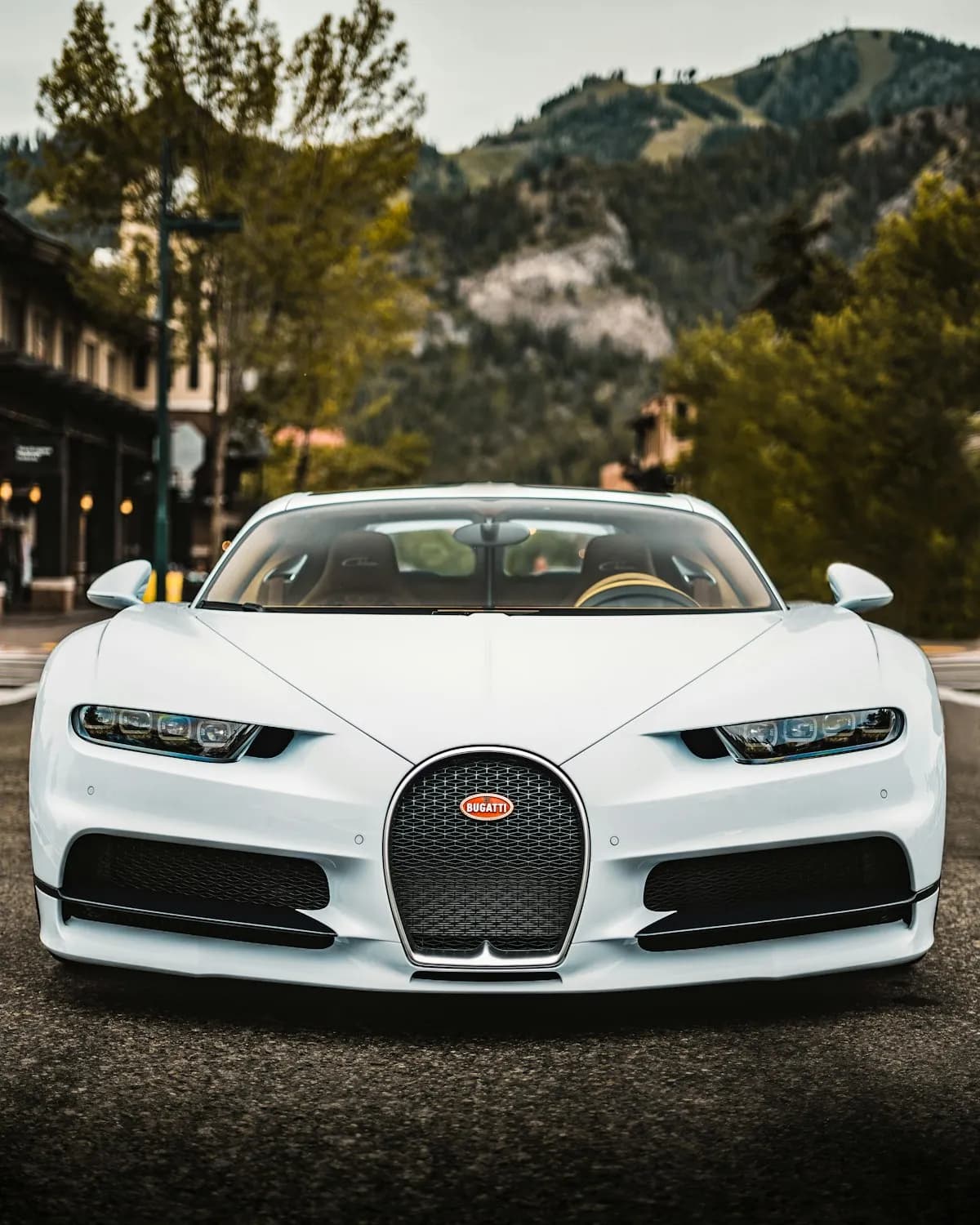
Buying a car in Germany, Italy or France and then driving it on Swiss plates is a routine operation. It simply runs through several desks in sequence: the seller, customs, your cantonal vehicle licensing office, your insurer. Each stage has its own paperwork and its own calendar. Here is how an import file unfolds, in order.
Step 1: choosing the vehicle abroad
Everything is decided here. A badly chosen car can cost more to regularise than it saves at purchase.
Three things to check before paying any deposit:
- The registration documents from the country of origin are complete and in the seller's name.
- The European certificate of conformity (COC) is available. Without it, the type approval file becomes longer and more complicated.
- The service history is documented and the actual condition matches the listing.
The habits are the same as for a local purchase. We set them out in our guide to buying a used car in Switzerland. At a distance they count double: you are often judging the car from photos and a phone call.
Step 2: transport to Switzerland
Two options.
- Driving it back yourself, on temporary registration from the country of departure and with suitable insurance. Cheaper, but you add mileage and you are driving a car you are still discovering.
- Transport on a flatbed truck. The car arrives in the condition you bought it in, and you have no journey to organise.
Either way, the border crossing is made through a customs office that is open and equipped to handle vehicles. It is a logistics detail, but it costs time when it is overlooked.
Step 3: customs clearance
On entry into Switzerland, the vehicle is declared to customs. Three items are collected at that point: customs duty, the automobile tax, and VAT calculated on the value of the vehicle.
The amounts depend on the vehicle, its value, its weight and its origin. You will not find a rate table here: the rates and the procedure fall under the Federal Office for Customs and Border Security, and they should be confirmed with that office or with a customs agent before you commit.
Two useful habits at this stage. Ask the seller for a proof of preferential origin: depending on the vehicle, it can change how your file is treated at the border. And keep the assessment document issued by customs, since later steps may call for it.
Step 4: inspection and type approval
The vehicle is then presented to the vehicle licensing office of your canton for the expertise, the Swiss technical inspection. The German-language abbreviation MFK refers to the same thing.
On a recent, standard European model, compliance is rarely an issue. Adaptations may be needed on a car that comes from further afield or carries non-catalogue equipment: lighting, speedometer display, modified parts, exhaust. Better to identify those points before buying than after unloading.
The exact requirements, the documents requested and the waiting time for an appointment vary from one canton to another. The vehicle licensing office of your canton of residence remains the only authoritative source. A phone call before you buy costs less than compliance work afterwards.
Step 5: insurance and plates
Once the inspection is passed, what remains is third-party liability insurance: the certificate is passed to the licensing office, which then issues the vehicle registration document and the plates. The car can be used on the road from that point.
Prepare this in advance. The insurer needs precise vehicle data, and that data is only complete once the type approval file is settled.
What costs time, and what costs money
Time is mostly consumed outside your control: obtaining a COC from the manufacturer, scheduling transport, securing an inspection slot. These are waits, not work. They add up quickly when the steps are launched one after another instead of being run in parallel.
Money goes elsewhere: transport, taxes at the border, cantonal fees, insurance and, where needed, compliance work. The euro to franc exchange rate also weighs on the outcome. An import stays worthwhile as long as the price gap with the Swiss market covers all of those items. Run that calculation before choosing the car, not after.
Think about resale too. A model that is common in French-speaking Switzerland, with a readable service book, moves on more easily than a rare version imported for its purchase price alone.
Doing it alone, or getting help
An organised private buyer can handle the whole operation. That is realistic for a recent, standard European vehicle bought from a professional seller with clean paperwork and an available COC.
Support makes sense in the other cases: a vehicle from outside the European Union or without a COC, a modified vehicle, a high purchase price, a seller who is hard to assess remotely, or no time for the administrative back and forth. A mistake in the file is paid for in downtime.
That is the scope of our vehicle import service: sourcing, verification, transport, customs clearance, inspection and plates, handled from Villeneuve on the Vaud Riviera. The most common questions about costs and timelines are gathered in our FAQ. And if you would rather buy a car that is already in Switzerland and ready to register, our available stock can be viewed online.